Tampilkan postingan dengan label kuliah. Tampilkan semua postingan

Kamis, 12 September 2013

Babad dalam Pemahaman Teks ala Jawa

“Teks adalah segala sesuatu yang dapat ditafsirkan.” Romo Bagus Laksana - 2013

Sebagai makhluk hidup yang bertutur, manusia cenderung memandang sejarahnya sebagai suatu teks narasi besar. Perjalanan sejarah suatu individu mempengaruhi pembentukan karakternya, dan suatu pemahaman kembali akan sejarah itu bisa menjadi acuan untuk memperbaiki hidup di masa sekarang maupun di masa mendatang. Gitu sih hasil obrolan bergizi saya sama Romo Bagus Laksana, dosen pembimbing saya dalam penulisan tugas akhir. Di bawah ini adalah pengertian saya tentang Babad yang dibagi oleh Romo Bagus. Saya agak males cari dan baca referensi jadi ya mungkin yang dibawah ini agak deviasi dan sok tau tapi ya gitu deh, hehehe...


Ketika kita mengartikan teks sebagai segala sesuatu yang dapat ditafsirkan, artian teks dalam studi ini akan lebih luas dibandingkan teks berbentuk buku seperti yang disuguhkan oleh orang-orang Barat. Teks dalam konteks Jawa adalah narasi yang melingkupi kehidupan sosial dan individu mereka dalam segala lakunya. Jika dalam konteks Barat teks adalah kertas bercetak huruf yang dibaca di dalam perpustakaan, Jawa “menulis” teks dalam ruang publik: dalam sesajen, dalam simbol-simbol, dalam patung-patung, dalam lukisan-lukisan dan laku spiritual. The reading room is everywhere. Dalam hitung-hitungan topografi, tingkat literasi kultur Jawa bisa dibilang rendah. Budaya merekam sejarah dalam kegiatan membaca dan menulis bisa dibilang miskin. Namun demikian, kesimpulan skeptis tersebut terjadi karena kita terkungkung dalam konsep literasi ala Barat. Sesungguhnya, narasi yang dibaca oleh masyarakat Jawa sama kayanya dengan yang dibaca oleh Barat, hanya saja cara pembacaannya yang berbeda.
Misalnya dalam hal Babad. Babad bukanlah kisah sejarah yang informatif, linear, dan objektif. Dalam pandangan Barat, Babad bisa dibilang kisah sejarah yang sangat berbelok dan bahkan mungkin berbahaya bagi demokrasi karena sifatnya yang melegitimasi kekuasaan kerajaan yang dikisahkan.

Babad berasal dari kata “babat”, dalam bahasa Jawa, mengacu pada kegiatan membabat hutan, membuka lahan, untuk membentuk komunitas (kerajaan) baru. Dari sini terlihat bahwa sebuah Babad berfungsi untuk mengisahkan asal usul suatu kerajaan atau suatu keluarga kerajaan. Babad tidak boleh ditulis oleh sembarang orang. Hanya seorang pujangga yang benar-benar ahli atau sang Raja sendiri yang boleh menulis Babad. Proses penulisannya juga tidak main-main. Sang Pujangga harus melakukan tapa, puasa, dan laku prihatin lainnya sebelum menuliskan kisahnya. Penulisan Babad membawa Si Pujangga ke suatu waktu yang telah lampau, membawanya ke proses dialogis dengan leluhurnya dan dengan konteks-konteks yang mendukung terjadinya kerajaan tersebut. Biasanya Babad ditulis oleh si Pujangga di suatu masa yang kelam, di masa kesusahan, sehingga dialog dengan leluhur membawanya ke proses refleksi yang meneguhkan identitas dirinya sebagai individu. Dengan demikian, sebuah Babad bukan sekedar kisah sejarah. Babad merupakan proses retret dan refleksi dari seorang Pujangga yang berusaha menelusuri kembali silsilah eksistensinya. Di lihat dari sudut pandang ini, sungguh berbeda dengan kisah sejarah yang ditulis akademisi modern yang berdiskusi dengan sesama akademisi sambil minum anggur untuk melancarkan pembicaraan dan membuka pikiran.

Rabu, 28 November 2012

Edward Said’s The Discourse of the Orient


Hari ini saya mendapat pencerahan tentang Post Colonialism. Saya baru tahu lho, kalau istilah Oriental itu bukan cuma tentang Bebek Peking atau Saus Tiram :O Ternyata istilah oriental itu merefleksikan dominasi Barat terhadap Timur, bagaimana dunia ini terbagi antara Barat, yang lebih kecil tapi kekuasaannya lebih besar, dan Timur, yang lebih luas tapi kemampuannya untuk menolak hegemony Barat sangat lemah.
Tugas F.O.E. Literature mingguan kali ini menghantarkan saya dengan seorang Edward Said, kritikus dan berdarah Palestina-Amerika yang berkutat dalam diskursus Post Colonialism, Orientalism, dan The Other. Di bawah ini adalah ringkasan terburu-buru yang saya buat tadi pagi. Semoga ada banyak masukan untuk diskusi ini :)

***


This excerpt of Said’s book opens my mind that the Oriental is not simply a group of things related with the culture of East Asia. In fact, the term reflects a complex chain of hegemony. In this writing, Said opens by describing the Orient and Orientalism and their relation to the Occident.
According to Said, Orientalism can be understood in at least three ways. The first one, and the most commonly used, is the imaginative description. In this description, the Orient is the ‘exotic beings’ that has a special place in European Western experience. Here the Orient is “…not only adjacent to Europe; it is also the place of Europe’s greatest and richest and oldest colonies… most recurring images of the Other… the Orient has helped to define Europe (or the West) as its contrasting image… (Said in Walder, 1990: 234).” Here the Orient and the Occident (English, French, Americans, other European colonizers) define each other and find their identity by searching the differences between each other. Therefore Orientalism can be understood as a mere airy European fantasy abour the Orient.
The second way is through the academic point of view, in which the Orient is described as the style of thought based upon an ontological and epistemological distinction made between the Orient and the Occident. Therefore those who write and teach the sociology, the history, the anthropology and other science in the big title of Orient may be called the Orientalists.
The third way is the Orientalism as the style in which the Western dominates, restructure, and have authority over the Orient. Here we have to look at how the British and French hegemonize the India and the Bible lands, and how the US expand her power over the Near East. In this way, the Occident is also the Orientalist. The issue of power, domination, and hegemony is indeed takes a big role in studying ideas, culture, and histories of the Orient.
Over the colonization years, the Orient has been a ‘career’ for Westerns. Under the umbrella of Western hegemony over the Orient, emerged a complex Orient that is suitable for studying in academy, displaying in museum, also illustration in anthropology and other studies.
After giving a description about what and how Orientalism is, Said takes the discourse further in the second part of the essay. In this part, Said elaborates how the discourse influences a White person abroad (particularly to the Far or Near East). Borrowing Kipling’s idea of The White Man, Said alluded the Westerns as The White Man. The White Man abroad will feel superiorly different, and the feeling will be emphasized by the contrast of his skin from the natives (or the Other). This feeling is formed b the authority before which the non-whites and the whites were expected to bend.
The nonwhites will ignore the actual outsiders (the colonies, the poor, the delinquent) among them, because they are busy thinking that they are inferior, that their function in the society is to give example about who were constitutionally unsuited for. They are mere the objects studied by the Occidental white. Taking ‘the Arabs’ as his example, Said says that the natives (or the Oriental natives) have the aura of apartness from the whites.

Minggu, 25 November 2012

Mengejar hari Rabu: Foundations of English Literature

Sometimes learning literature means you spend too much time reading literary theories so that you don't have time to read literary works.


Sepanjang semester ini kami terengah-engah mengejar hari Rabu, membaca dan meringkas esai-esai sulit di buku ini, supaya bisa kami kumpulkan sebelum jam 12 di hari Rabu. Dengan begitu kami selalu punya sedikit bahan untuk diperdebatkan, dipertanyakan, dan dibagikan hari Kamisnya. Kami keluar kelas dengan kepala sedikit lebih penuh di hari Kamis, bersyukur atas sekelumit pengetahuan yang bisa kami renungkan sembari makan siang. istirahat sejenak, sebelum mulai membaca lagi untuk mengejar hari Rabu.

Jean-Paul Sartre’s Writing, Reading, and The Public; a Discussion on Commited Literary Work


Here is a summary of Sartre's work that I did as a weekly homework. This summary was made in a hurry so I believe that it is not good enough. I am open for any discussion on this topic, so it can broaden our knowledge about literature and commitment.
 ***

In this essay Sartre elaborates the role of a (prose) writer in describing the world and experience of his readers in his writing. In writing a literary work, a writer must have (intentionally or unintentionally) chosen a group of people as his readers. Usually a writer will choose the same group to which he belongs to (entre nous), for example Richard Wright chose to dedicate his writing to the cultivated black slaves of the North (and the white Americans of goodwill). Sartre assumes Wright and other writers will choose the people of their group because they “… have lived through the same events, who have raised or avoided the same questions, have the same taste in their mouth; they have the same complicity, and there are the same corpses among them” (Sartre in Walder, 1990:84). Therefore, people of the same group (period of time and community) usually prefer to, fight against, and understand the same things.
According to Sartre, a writer’s task is to put in words the world and experiences that are felt by and happen to their readers. In Wright’s case, Wright put in words the misery that has to be endured by his fellow black slaves. The literate black slaves that read his books, e.g. Black Boy, understand the things Wright mentioned and omitted in his writings. The readers then will reflect what they read to their very life, and they will see themselves as the subject written in the story. Not only that they see themselves, the black slave readers will see themselves seen by other readers who read the same story.
Wright’s stories are also intended to be read by white people who are against slavery. In this case, Wright’s writing will confirm what they believe and what they consider to be the truth. Black Boy also can be read by an acute negro-phobic. In this case, the negro-phobic will see himself as a ‘bare-naked’ antagonist. He also will realize that he is also seen ‘bare-naked’-ly by other readers. The wanted effect is that he feels guilty to the black slaves and changes his attitude towards them. The other probability is that the book makes him aware of what the blacks think towards him and his group, but he continues his anti-negro attitude whatsoever. However, white readers are the Others in Wright’s case, because his writings are only can be fully understood by those who belong to the same period and community as he did.
Besides presenting the world and the experiences of the real people of the real world in his writing, a committed writer is also aware that his writing can changes things (for example the attitude of an anti-negro). A piece of writing can cause guilty conscious to the whole society by putting in words the acts, ideology, and facts inside the society into a writing for them to read. The writers may say that by writing they are serving the community’s interests, but the conservative governing class may see them as long-lasting antagonists. The conservatives try to preserve the balance, while a piece of writing may bring about the chaos of change. However, writers earn their living from those who buy their writings, and it is only the governing class who can pay such luxury (of what Sartre defines as an unproductive and dangerous job). Sartre says that the writers and the governing elites are always in mutual opposition, but in the same time, they need each other.

***

This discussion is actually followed by Adorno's Commitment, but I did not finish reading the essay.

Sabtu, 21 Juli 2012

Pasar Jodhog, Bantul, Yogyakarta during the Shoots for Bengkel Sastra Movie

Bantul is one of the most original Javanese places in Jogja. You can see a trace of tradition in every corner of the town. This traditional market is one of Bantul wonders. Only crowded in the day of Pon according to Javanese calendar, this market has many things to offer us during the shooting of our Bengkel Sastra movie entitled "Manut".
Es Camcau is one of the yummiest Javanese drink


the camcau jelly
the seller is adding a dollop of thick brown sugar syrup into my glass


the red jelly in coconut milk
monte jelly beads
mine!
Es Camcau!
wanna some?

let's try
Damn, it's YUMM!
the wallah


a half glass of joy

he got some punk stickers from some vendors in the market

traditional toys

kupat tahu vendor


the busy market

the market is beside a ricefield

bakso noodle soup

it's breakfast, my friend!

a friend is eating mie ayam, a chicken noodle soup, as breakfast

ancient smoking kit! tobacco, cloves, kelembak, cigarette paper

kelembak for elder smokers

tobacco

kelembak srintil

the cloves and the traditional scale

the traditional smoking kit


flower petals are sold for pilgrimage to cemeteries, as offerings to the deceased

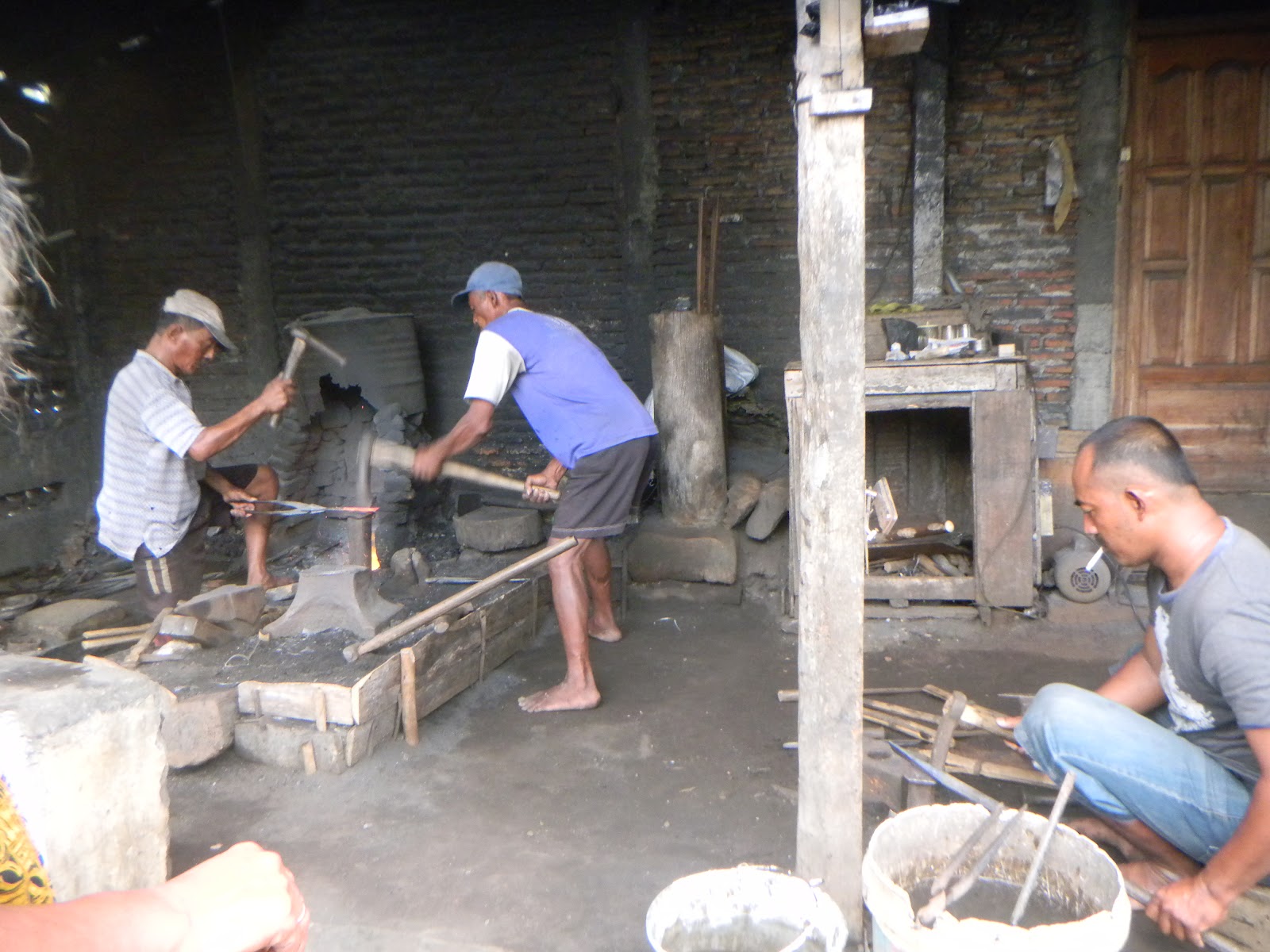
the blacksmith corner


Senin, 09 Juli 2012

Photography for Dummies Project at Social Service Program (KKN)

Photography for Dummies project adalah proyek fotografi amatir Gisela Swaragita. Proyek ini dimulai ketika saya menemukan salah satu 'jati diri' (cieilah!) saya di masa KKN Januari-Februari 2012 lalu. Kami bersembilan tinggal di rumah sementara di sebuah dusun bernama Ngepringan, di lereng Merapi. Warga dusun ini kehilangan tanahnya saat erupsi 2010 lalu sehingga harus tinggal di pondok-pondok anyaman bambu sementara yang dibangun di atas lahan desa. Di sana ada banyak sekali obyek menarik untuk diabadikan. Saya memakai kamera digital Nikon Coolpix saya dan kamera SLR Canon (entah apa serinya) milik teman saya. Di bawah ini adalah cuplikan kenangan saya di huntara Gondang 2 bersama Siwi, Sisca, Dita, Arnold, Adhi, Mas Iyus, Kristin, dan Helen.


adhi, sisca, dita, arnold dan anak-anak dusun ngepringan

anak-anak ngepringan, sangat ceria dan bisa bermain dengan apa saja

daun dan embun

siwi dan anak-anak dusun ketika acara pengajian bersama

anak-anak selalu bersemangat, apa pun acaranya

you can encounter a pair of orange eyes, peeping from below, if you look closer :))

sawah kadus kami Pak Rubiso, suatu sore ketika kami ke sana untuk mengambil daun pisang. Kami akan membuat lontong untuk acara desa esoknya.

the grand merapi in a velvet sunset

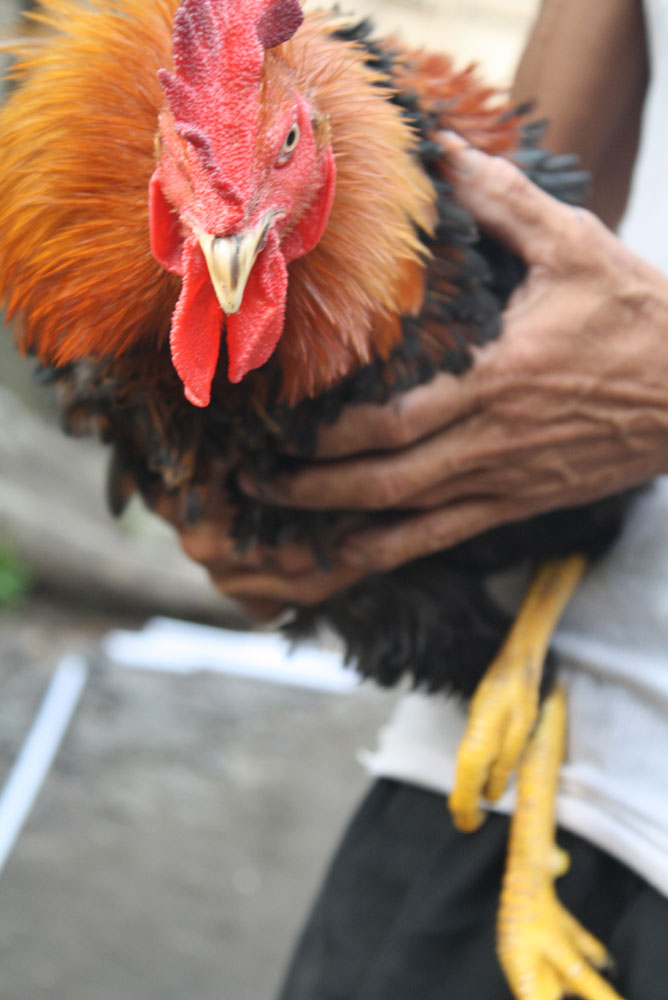
ayam jago Pak Yoto. Kebanggaan keluarga

the kids love us!

Pinda dan Bayu = Ran dan Sinichi

"we're kewl!"

pinda dan adhi

suatu pagi tetangga kami yang baik memberikan 3 lele buesar-buesar hasil pancingannya untuk sarapan kami. masalahnya lelenya masih hidup dan kami harus bunuh dan beteti sendiri

siwi and adhi's frightened expression. padahal gak sabar nunggu lelenya mateng

sisca, emak kami di shelter

siwi menulis kata-kata pembukanya untuk pertemuan dusun pagi itu

muka-muka ngantuk sisca, adhi, dan siwi

tower mushola terlihat dari pondokan kami. selama mengungsi mereka menggunakan mushola sementara yang sederhana.

para warga selalu bersemangat jika ada pertemuan dan kumpul-kumpul

siwi dan cerita-cerita horornya

sahabat tercinta kami, Siwi, ulangtahun di masa KKN! Selamat ultah Siwi, semoga berkesan!

padahal dia lagi  baik hati mau bersihin gentong

happy birthday siwi! *pecahin telur di kepalanya*

epic!
tanggal 4 tiap bulan ada posyandu
Drunk in Public

love love love!

wajah-wajah perempuan lintas generasi

selama KKN ortu kami jadi sangat perhatian. Ini adalah tangkai-tangkai kelengkeng yang sudah habis kami sikat, buah tangan dari mamanya Dita.

listrik sering mati malam-malam,hujan dan angin kencang menerpa atap seng pondok kami. tapi kami hangat mengelilingi lilin, membaca, dan bermain gitar bersama-sama

siwi membaca buku anak-anak dari perpustakaan dusun. arnold menghangatkan diri dengan rokok. adhi bersenandung diiringi gitar di sudut yang gelap

kami selalu hangat

the fingers on the fretboard

adhi, dita, dan arnold! saya suka banget foto ini!

hari cerah!

bunga rumput, suatu kecantikan kecil di sela-sela rumput hijau

sisca di tengah jalan yang melintasi huntara

rumput untuk makanan sapi. Di kota sapi adanya di warung bakso.

bunga kuning, entah apa namamu, tapi kamu unyuuuuu...!

tanah gunung yang kami pijak, berlapis daun-daun gugur yang segera membusuk

pink flower, another tiny beauty hiding among shrubs, waiting for you to come if you look closer